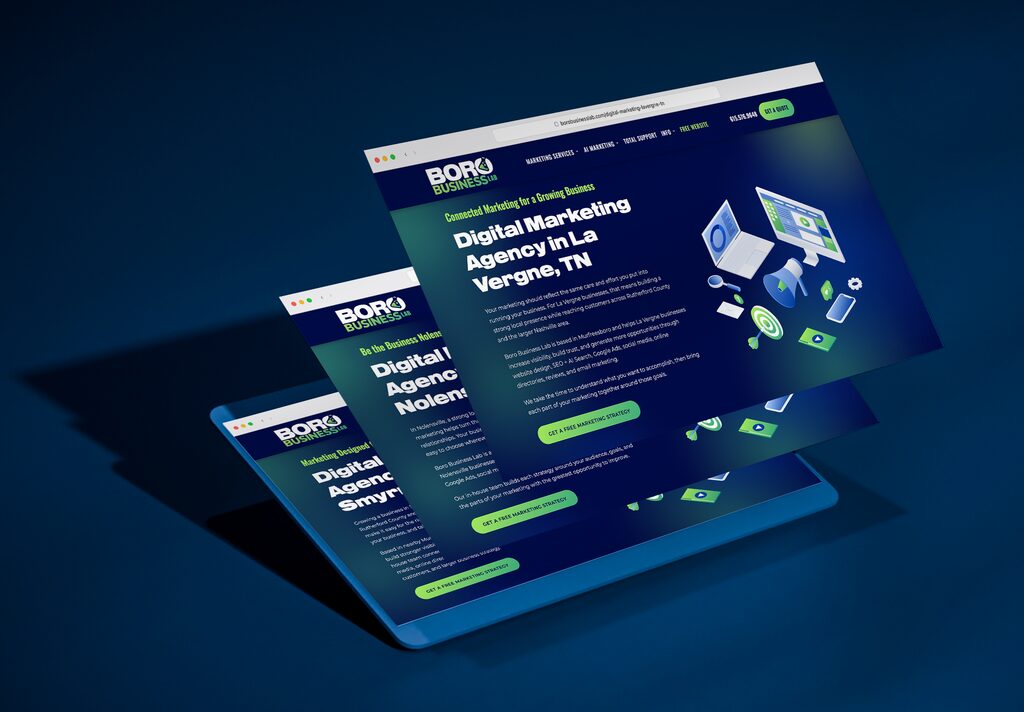
If your business serves Murfreesboro and several surrounding Middle Tennessee communities, creating a webpage for every city can sound like an obvious SEO strategy.
Murfreesboro gets a page. Smyrna gets a page. La Vergne gets a page. Lebanon gets a page. Before long, you have dozens of location pages targeting every community within driving distance.
But more pages don't automatically mean better local visibility.
A strong local SEO strategy focuses on whether each page is genuinely useful to someone searching in that area. If the only difference between two pages is swapping "Murfreesboro" for "Smyrna," those pages probably aren't offering much value to potential customers. Creating large numbers of nearly identical pages can also raise concerns under Google's spam policies.
The better question isn't, "How many cities can we create pages for?" It's "Which cities actually need their own pages, and what useful information can we provide for customers there?"
Why Creating a Page for Every City Isn't Always the Best SEO Strategy
There are legitimate reasons to create location pages as part of a local SEO strategy.
People frequently search for services based on location. Someone might search for an electrician in Smyrna, a roofer in Murfreesboro, or a remodeling company serving Spring Hill.
A dedicated page can help a business explain its services and experience in a particular market.
Industry research also supports the importance of geographic relevance.
The 2026 Local Search Ranking Factors report from Whitespark identifies location-specific website content as an important consideration according to surveyed local SEO professionals. However, this is industry research based on professional experience, not a list of confirmed Google ranking factors.
That doesn't mean publishing 30 versions of the same service page is a winning strategy.
Google's spam policies identify certain practices involving nearly identical location pages as potential doorway abuse. Google also warns against stuffing pages with lists of cities or regions simply to appear in more searches.
Your location pages should help customers understand where you work and what you offer, not just give Google more city names to find.
Physical Location Pages and Service-Area Pages Are Different
Before creating location pages, it's important to understand the difference between a physical business location and an area your business serves.
For example, a company with an office in Murfreesboro and another staffed office in Franklin may have valid reasons to create individual pages for each location.
Those pages can include details specific to each office, such as:
- Address and directions
- Business hours
- Contact information
- Staff members
- Services available at that location
- Photos of the office or team
A service-area page is different.
Your HVAC company, landscaping business, or contracting company might be based in Murfreesboro but regularly work with customers in Smyrna.
You can create a useful page explaining your services in Smyrna without claiming to have a physical office there.
The same distinction matters for Google Business Profiles.
Under Google's business representation guidelines, businesses must accurately represent their real-world locations.
Service-area businesses that travel to customers but don't serve customers at their business address should generally maintain one Business Profile for the area they serve. Separate profiles may be permitted when businesses operate genuinely separate locations with their own staff and service areas.
A virtual office or service-area webpage doesn't automatically qualify a business for an additional Google Business Profile.
The key is to represent where your business actually operates, both on your website and in Google Maps.
When Does a City Deserve Its Own Page?
Before creating another location page, consider whether the area is important enough to support useful, original content.
Start by looking at actual demand.
Do customers regularly come from that city? Are people searching for your services there? Have you completed projects in the area? Is it a market your business actively wants to grow?
Next, consider whether you have something specific to say about that location.
Imagine a Murfreesboro contractor that regularly completes projects in Smyrna.
A useful Smyrna page could explain the services available in that area, highlight completed projects nearby, answer questions local customers commonly ask, and feature testimonials from Smyrna clients.
That's very different from copying the Murfreesboro page and replacing every mention of the city.
Boro Business Lab's own Smyrna SEO page provides an example of location-specific content. Rather than simply repeating its Murfreesboro messaging, the page discusses Smyrna's industries, local areas, landmarks, and competitive search environment.
The goal is to give each page a purpose beyond targeting another city name.
What Makes a Location Page Worth Visiting?
Think about the customer first.
If someone lands directly on your Smyrna page from Google, will they find useful information they couldn't get from your general services page?
A strong location page might include:
- Services offered in that specific area
- Recent projects or examples of local work
- Testimonials from nearby customers
- Photos of actual projects
- Frequently asked questions from customers in that market
- Service availability and geographic coverage
- Information about how your business serves the community
Not every location page needs all these elements. The point is to make the content genuinely helpful to someone searching in that city.
Location pages should also fit naturally into the rest of your website.
Relevant service pages can link to appropriate city pages, and location pages can help visitors find the specific services they need. Important locations should be accessible through logical navigation rather than hidden as isolated pages created only for search engines.
For more on building related website content that works together, see Boro Business Lab's guide to layered SEO content.
What Weak Location Pages Look Like
Weak location pages often follow the same pattern.
A company creates a generic 500-word service page, duplicates it for Murfreesboro, Smyrna, La Vergne, Nolensville, Lebanon, Franklin, and Spring Hill, then changes a few city names in each version.
The pages may technically target different locations, but they're not providing customers with different or particularly useful information.
Another common tactic is adding a large list of cities to a page or footer:
"Serving Murfreesboro, Smyrna, La Vergne, Franklin, Spring Hill, Lebanon..."
There's nothing inherently wrong with telling customers where your business operates. The problem comes when city names are repeated unnaturally throughout a website primarily to influence search rankings.
Google's spam policies identify both keyword stuffing and scaled content created primarily to manipulate rankings as problematic practices.
Here's a simple comparison:
A weak location page repeats the same generic service description with a different city name.
A useful location page explains what your business offers in that city, includes relevant local information, and helps potential customers decide whether you're the right choice.
If you can't explain why two city pages need to be different, you may not need both.
Sometimes One Service-Area Page Is the Better Choice
There's nothing wrong with having one strong service-area page that clearly explains where your business works.
Suppose most of your customers come from Murfreesboro and Smyrna, but you occasionally complete projects in several smaller nearby communities.
Murfreesboro and Smyrna might justify dedicated pages, while those other communities could be mentioned naturally on a broader service-area page.
You can always create another city page later if demand grows and you have enough location-specific information to make it genuinely useful.
This approach can also make your website easier to navigate and maintain.
Instead of spending time producing dozens of similar pages, your business can focus on improving the pages that matter most to your customers.
Measure Whether Your Location Pages Are Working
Publishing a location page is only the beginning.
Once the page is live, you need to understand whether it's helping your business reach potential customers.
Tools such as Google Search Console, website analytics, call tracking, and form reporting can help answer important questions:
- Are impressions for relevant local searches increasing?
- Is the page attracting qualified organic traffic?
- Are visitors exploring your services?
- Are calls and contact form submissions coming from the page?
- Are those inquiries turning into actual leads and customers?
Boro Business Lab's SEO and AI Search services focus on tracking search performance and website traffic so businesses can make informed decisions about their online visibility.
A city page that earns thousands of impressions but never generates a qualified inquiry may need improvement or a different strategy.
Meanwhile, a page with fewer visits that consistently attracts the right customers could be much more valuable.
The goal isn't just to appear in more local searches. It's to bring the right people to your business.
Build Local SEO Around Real Markets, Not a List of City Names
You don't need a separate page for every Middle Tennessee city where you're willing to do business.
You need pages for the markets that matter, with useful information that helps customers understand what you offer and why they should choose you.
For some businesses, that might mean several detailed city pages. For others, a few primary location pages combined with a broader service-area page will make more sense.
A successful local SEO strategy should reflect how your business actually operates, provide helpful information to local customers, and turn relevant searches into qualified leads.
Not sure whether your business needs separate pages for Murfreesboro, Smyrna, or other nearby cities? Boro Business Lab can help you review your website, identify which locations deserve their own pages, and develop a local SEO strategy focused on bringing in the right customers.
Explore our digital marketing services to get started.